
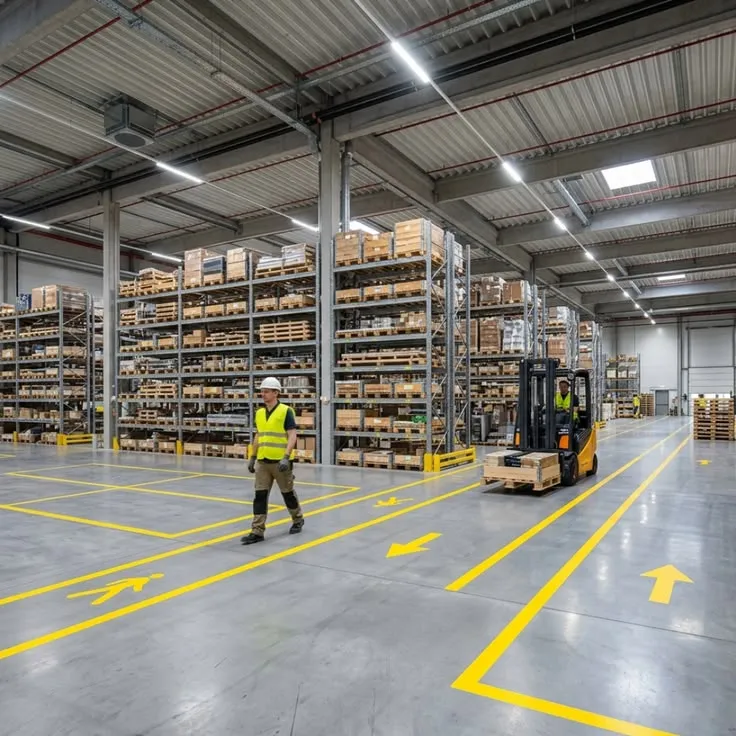
Warehouse automation projects are usually planned around throughput, labor efficiency, storage density, and faster order movement. New conveyors, sortation equipment, robotics, charging stations, and fixed work cells can transform how a building operates. The concrete beneath those systems, however, is easy to overlook. Automation can introduce new anchor points, concentrated loads, maintenance routes, and traffic patterns. Reviewing the floor before equipment installation gives facility managers an opportunity to repair hidden defects and prepare the surface for a very different operating environment.
Automation Changes Load Locations
Traditional warehouses distribute much of their activity across forklift aisles and open staging areas. Automation can shift those loads into fixed equipment zones.
Conveyor supports, robotic cells, racking interfaces, and control stations may place weight repeatedly on specific sections of the slab. Areas that previously experienced light traffic can suddenly become permanent equipment locations.
Managers should therefore compare the proposed automation layout with the existing floor condition before final installation begins.
Anchoring Creates New Floor Penetrations
Automated systems often require extensive anchoring. Conveyor legs, barriers, equipment frames, and safety fencing may all be fixed directly to the concrete.
Drilling into a slab with cracks, old patches, or weak surface material can expose underlying problems. Existing anchor holes from previous layouts may also need repair before new equipment is positioned.
Facilities considering Warehouse Resin Flooring should coordinate floor repairs and coating work with the equipment installer so anchor locations are understood in advance.
Old Traffic Areas May Change Function
Automation can completely redraw warehouse movement. A former forklift aisle may become a pedestrian service corridor, while an old storage area may become a robotic picking zone.
This means the most heavily worn sections of the existing floor may no longer experience the same traffic after the retrofit. Conversely, previously protected concrete may become exposed to carts, maintenance crews, or automated equipment.
Flooring decisions should therefore reflect the future layout instead of reproducing the old traffic pattern.
Cable and Utility Work Affects the Slab
Automation upgrades may require electrical conduit, data lines, charging infrastructure, or other utilities. Some projects involve cutting trenches or creating new penetrations in the concrete.
These repairs need to be coordinated carefully with flooring work. New patches should be assessed for stability and elevation before the resinous system is installed.
Poorly finished trench repairs can create rough transitions that later interfere with carts, autonomous equipment, or routine cleaning.
Preparation Is Easier Before Equipment Arrives
Once conveyors and robotic systems are installed, access to the concrete becomes more difficult. Tight spaces beneath equipment frames can limit mechanical preparation and repair options.
An Industrial Epoxy Flooring Contractor In Nj should be involved early enough to inspect the open slab before automation equipment occupies the area. Existing coatings, weak concrete, cracks, contamination, and old repairs can then be addressed while access is still available.
Mechanical preparation can also create a more consistent substrate before the new resinous system is applied.
Automated Equipment Needs Smooth Transitions
Some automated material-handling systems depend on precise movement across the floor. Autonomous mobile robots, carts, and small-wheeled equipment may be more sensitive to rough joints, abrupt patches, or uneven transitions than large pneumatic-tired vehicles.
Managers should inspect the travel routes planned for this equipment and identify damaged joints or floor irregularities before commissioning begins.
A smooth operational route does not require perfectly flat decorative flooring everywhere, but obvious defects should not be ignored where automated equipment will travel repeatedly.
Maintenance Access Should Be Preserved
Automation does not eliminate human movement. Technicians still need access to motors, sensors, controls, belts, and safety systems.
The floor around maintenance points should remain easy to clean and practical to walk on. Oil, grease, or small service spills may also occur around mechanical components.
Texture should therefore balance traction with the ability to move tools and service carts through the area efficiently.
Sequence the Project Carefully
Automation installation and flooring work can interfere with each other if they are scheduled independently. Heavy lifts, drilling, welding, and equipment placement can damage a finished resinous surface.
Project teams should coordinate concrete repair, preparation, coating, curing, equipment installation, anchoring, and final markings as one construction sequence.
This reduces the chance that the new floor needs repairs before the automated system has even entered full operation.
Conclusion
Warehouse automation changes more than equipment and workflow. It can alter load locations, traffic routes, anchor patterns, utility paths, and maintenance access across the entire slab.
Reviewing the floor before conveyors, robotics, and fixed systems are installed gives managers a valuable opportunity to correct defects while the concrete remains accessible. By coordinating substrate repair, resinous flooring, equipment layout, utilities, and construction sequencing, facilities can create a more dependable foundation for automation rather than adapting the floor only after the new system is already in place.
