
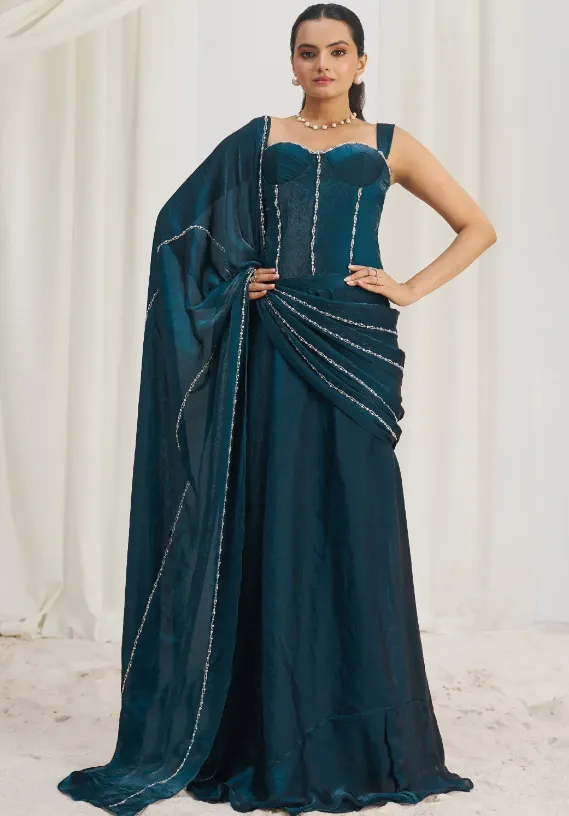
A saree can look elegant and traditional, but getting the drape right often takes time, practice, and a little patience. For women who want the same visual effect with less preparation, a ready to wear saree offers a practical alternative. The pleats and basic structure are already arranged, so the outfit can be put on more quickly without having to build the drape from the beginning. This makes the style especially useful for weddings, festive parties, receptions, and functions with tight schedules.
Pre-stitched designs are also helpful for people who love sarees but do not wear them often enough to feel confident with traditional draping. Instead of worrying about uneven pleats or a slipping pallu, the wearer can focus on the blouse, jewellery, footwear, and overall styling.
Why Pre-Stitched Sarees Feel Different
A conventional saree gives complete freedom over pleating and drape, while a pre-stitched version is designed to create a consistent silhouette each time it is worn. Depending on the construction, it may include fixed pleats, a skirt-like base, hooks, zips, or an attached pallu.
Consistency Can Be a Real Advantage
For events where several photographs are planned, a stable drape can be useful. The pleats are less likely to shift during walking, greeting guests, or sitting through a ceremony. This can also help women who prefer a neat, structured look throughout the event.
Plan Around the Event Schedule
One of the biggest benefits of a Ready Made Saree is the time it can save on a busy event day. Wedding guests may need to travel between venues, bridesmaids may have early-morning makeup appointments, and family members may be helping with preparations. An outfit that can be worn quickly reduces one more task from the schedule.
This convenience can be especially valuable for destination weddings or events where access to a professional draper is limited. The outfit still feels festive, but the preparation is more predictable.
Choose the Right Construction
Not every pre-stitched saree is made in the same way. Some designs resemble a fitted skirt with an attached pallu, while others keep more of the traditional saree shape and simply secure the pleats.
Before choosing one, check:
-
How the waist is fastened and whether it is adjustable
-
Whether the pleats are permanently stitched or partially flexible
-
How the pallu is attached or secured
-
Whether the blouse is included or sold separately
-
If the length works with the footwear you plan to wear
-
Whether the fabric has enough lining for comfortable movement
These details determine how natural and secure the final drape will feel.
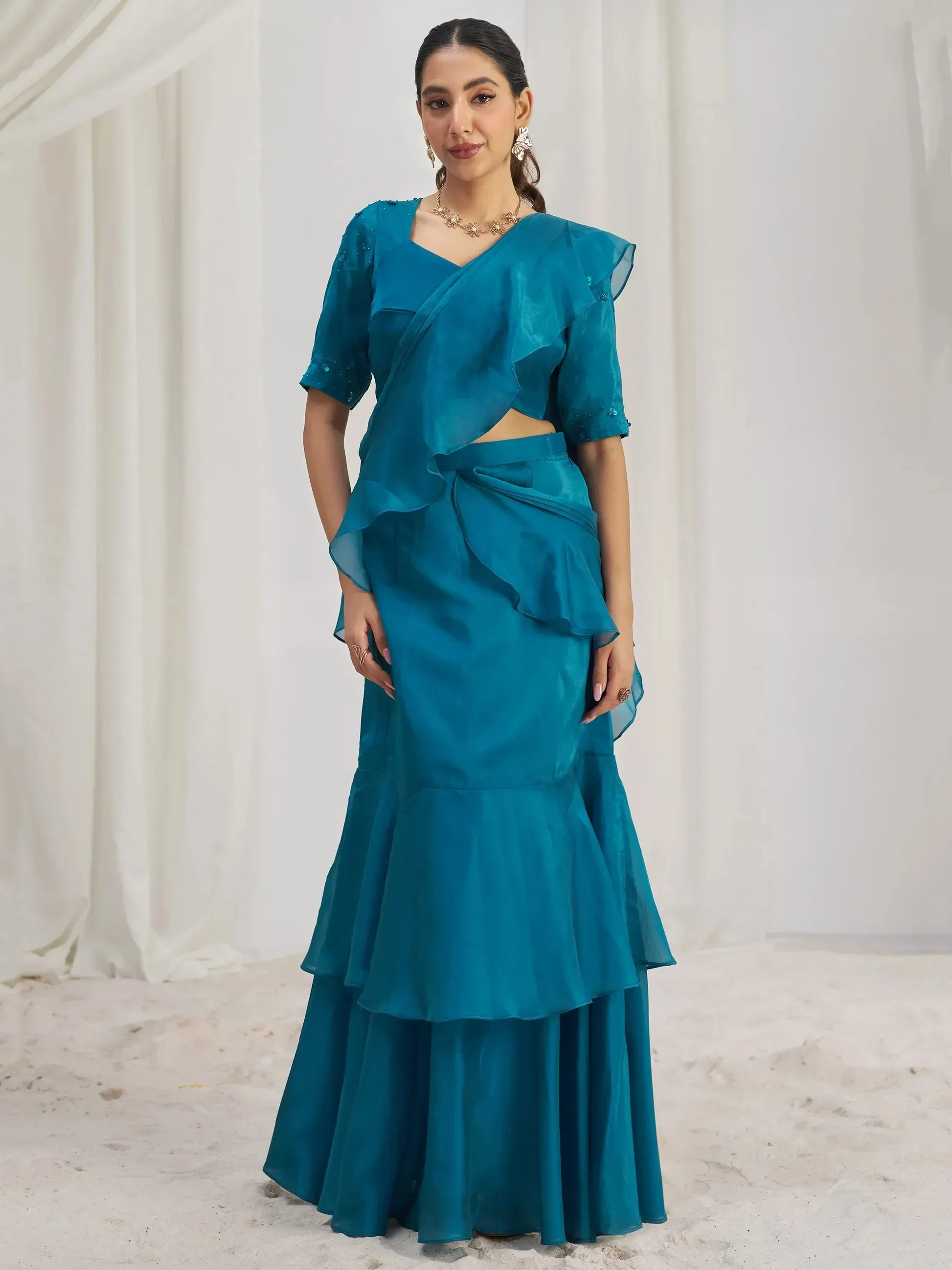
Use the Blouse to Change the Mood
Because the saree structure is already set, the blouse becomes an easy way to personalise the outfit. A sequinned blouse can make the look suitable for an evening reception, while embroidery or brocade can create a more traditional effect. A clean solid-colour blouse may work better for a modern or minimalist event.
Pay Attention to Proportion
The blouse should balance the saree rather than compete with it. If the saree has a dramatic pallu or heavy border, a simpler blouse can keep the outfit polished. If the saree is understated, stronger sleeves, an interesting neckline, or contrasting fabric can add personality.
Keep Styling Functional
Pre-stitched sarees are often chosen for convenience, so accessories should support that goal. Very heavy necklaces, uncomfortable heels, or oversized handbags can make an otherwise easy outfit difficult to manage.
A streamlined approach usually works well:
-
Statement earrings instead of several heavy jewellery pieces
-
Block heels or embellished flats for longer events
-
A small clutch that leaves the hands free
-
Secure hair styling for crowded functions
-
A few well-placed pins if the pallu needs extra support
The aim is to preserve the ease that made the pre-stitched format appealing in the first place.
Know When This Style Makes the Most Sense
A pre-stitched saree can be particularly useful for people attending back-to-back wedding events, travelling for a celebration, or dressing without assistance. It can also suit younger wearers who want to experiment with saree styling without mastering traditional pleating immediately.
It does not replace the versatility of a conventional saree, but it offers another option for occasions where speed, consistency, and confidence matter more than changing the drape.
Conclusion
Pre-stitched sarees show how traditional clothing can adapt to modern schedules without losing its festive appeal. Their main strength is convenience, but a good design also provides a neat silhouette, reliable pleats, and enough freedom for personal styling. By checking the construction, waist fit, pallu placement, blouse proportions, and event requirements before choosing, women can avoid many common dressing-day problems. For celebrations where every minute matters, a well-selected pre-stitched saree can make getting ready simpler while still delivering the polished presence expected from occasion wear.
